
How to Identify the 1878 Shield Nickel (Proof Only)
How to recognize the 1878 Shield Nickel, another proof-only date in the series, and the mirrored surface traits genuine proofs should show.
Read the full 1878 Shield Nickel (Proof Only) encyclopedia entry →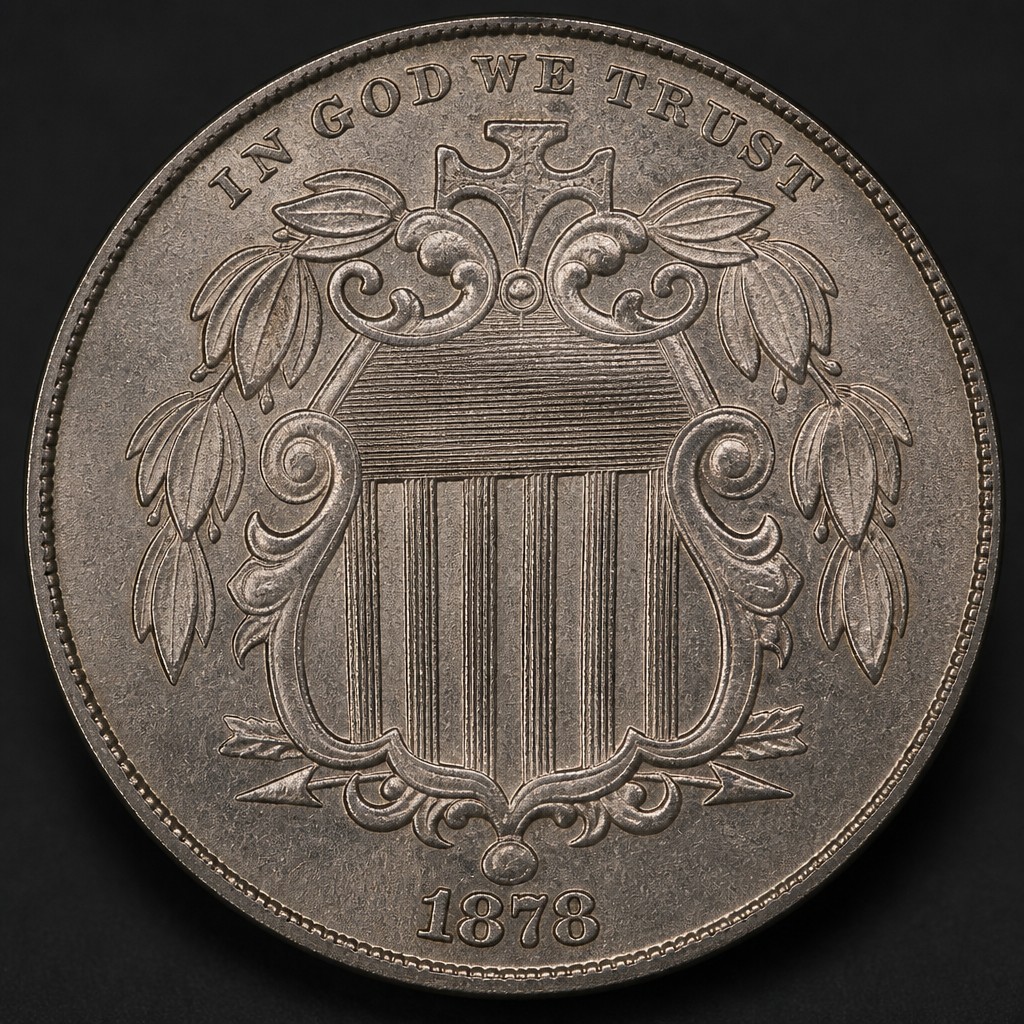
What It Is
The 1878 Shield Nickel, like the 1877 issue before it, was struck only as a proof coin for collectors, with no coins produced for general circulation that year. It stands as one of the scarcer dates in the Shield Nickel series, and its status as a second consecutive proof-only year makes both dates a notable pair for collectors focused on the series' history. Both years fall late in the series, not long before the Shield design itself was replaced by the Liberty Head Nickel in 1883.
Obverse Design
The obverse depicts a heraldic shield with vertical stripes below a horizontal top band, resting above crossed arrows and an olive branch, with the date below the shield.
Reverse Design
The reverse shows a large numeral 5 at the center, encircled by stars with a plain field between them, consistent with the No Rays style used after mid-1867. UNITED STATES OF AMERICA arcs around the top rim.
Size, Weight, Metal, Edge
The coin is 20.5mm in diameter, weighs 5.00 grams, is made of 75% copper and 25% nickel, and has a plain edge, matching the specifications of the rest of the series.
Mint Marks
As with every Shield Nickel, the 1878 was struck only at Philadelphia and has no mint mark anywhere on either side of the coin.
Proof Surface Characteristics
Genuine 1878 Shield Nickels should display the hallmarks of 19th-century proof coinage: sharp, squared-off rims, crisply struck design details down to fine elements like the olive branch leaves and shield lines, and deeply reflective, mirror-like fields resulting from being struck on polished planchets with polished dies, often more than once to bring up full detail.
Grading at a Glance
Since no business strikes exist for this date, quality is assessed by how clean and undisturbed the mirrored fields remain, along with the overall sharpness of the design. Hairline scratches, spots, or contact marks in the fields reduce the visual appeal and grade of an otherwise sharply struck proof, even when the underlying design details remain fully formed.
Authenticity Red Flags
Given the rarity and value of this date, be cautious of coins claimed to be 1878 proofs that show actual wear, weak or mushy details, or fields lacking a true mirror finish. Also watch for dates altered from more common years to resemble 1878; examine the digits closely under magnification for tool marks or inconsistent wear relative to the rest of the coin before accepting the date as original. A coin's overall look, including the color and texture of its surfaces, should also match what is typical of a coin that has spent well over a century in a collector's holder rather than in circulation.
Frequently asked questions
Were business strikes made in 1878?
No, 1878 is a proof-only date with no coins struck for circulation.
What does a genuine proof surface look like?
Sharp, squared rims and deeply mirrored, reflective fields with crisply struck design details.
Does the 1878 Shield Nickel have a mint mark?
No, it was struck only at Philadelphia, which used no mint mark.
What is a warning sign for a fake 1878 proof?
Visible wear, dull or non-reflective fields, or design details that look soft rather than sharply struck.