
How to Identify the 1873-CC Seated Liberty Quarter (No Arrows)
An extremely rare Carson City quarter struck without arrows beside the date, made in the earliest days of 1873 before a mid-year weight change added arrows to the design.
Read the full 1873-CC Seated Liberty Quarter (No Arrows) encyclopedia entry →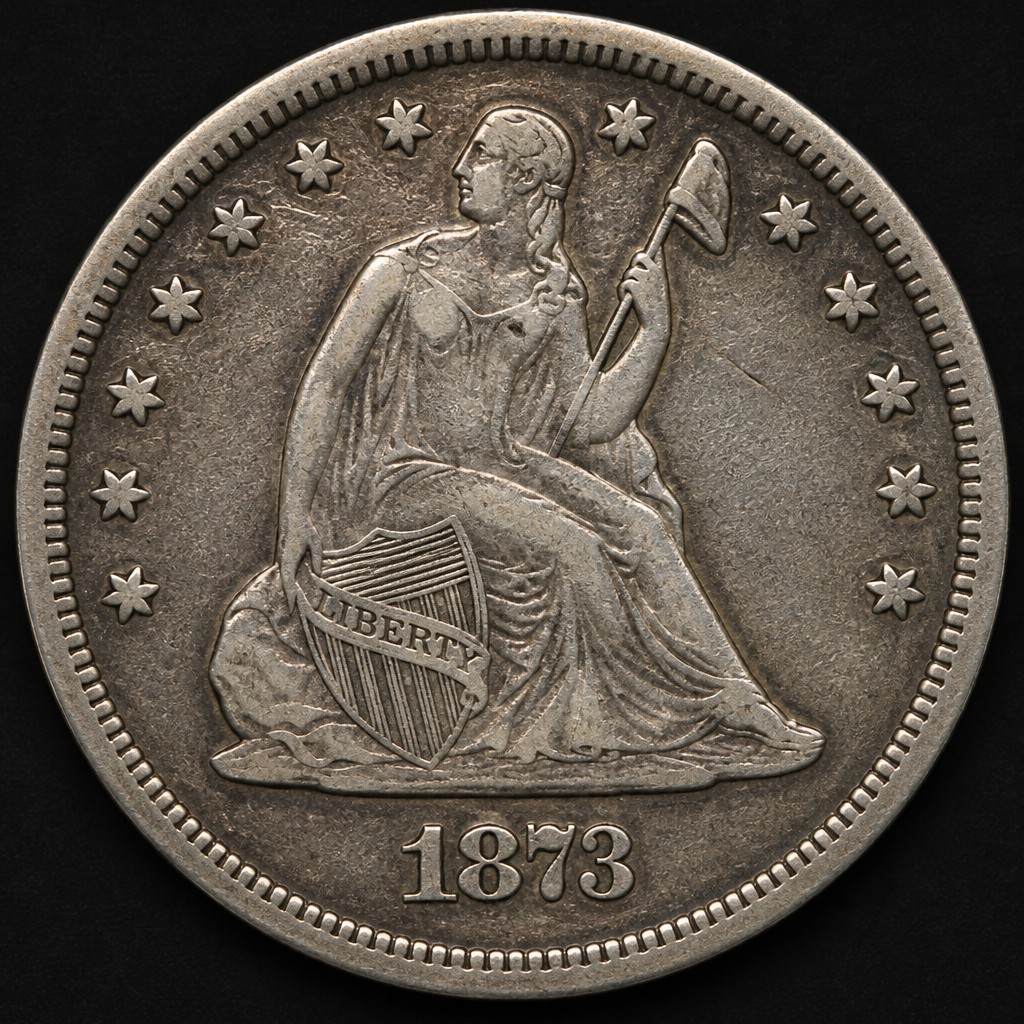
What the Coin Is
The 1873-CC No Arrows quarter is one of the great rarities of United States coinage. It was struck at the Carson City Mint in the brief window at the start of 1873 before a weight adjustment led the Mint to add arrows beside the date for the remainder of the year, making the No Arrows variety from this mint exceptionally scarce and one of the most sought-after issues in the entire Seated Liberty quarter series.
Obverse Design & Inscriptions
Liberty sits on a rock holding a liberty pole with cap and a shield inscribed "LIBERTY," with drapery at her elbow. The date "1873" appears below with no arrows flanking it, distinguishing it from the Arrows variety struck later the same year at the same mint.
Reverse Design & Inscriptions
The reverse shows an eagle with a shield on its breast, an olive branch and arrows in its talons, with "IN GOD WE TRUST" above the eagle (added to the design in 1866), surrounded by "UNITED STATES OF AMERICA" and "QUARTER DOL." The "CC" mintmark appears below the eagle, marking this coin's Carson City origin.
Size, Weight, Metal, Edge
The coin is struck in 90% silver and 10% copper at the pre-1873 weight standard of about 6.22 grams, with a diameter of 24.3 mm and a reeded edge, a weight standard that changed for the Arrows variety struck later the same year.
Where to Find the Mint Mark
Look for the "CC" mintmark on the reverse, positioned below the eagle and above "QUARTER DOL." Its presence combined with the absence of arrows beside the date on the obverse is what defines this specific rarity, so both features must be checked together.
Telling It Apart From Similar Coins
Confirm both conditions together: no arrows beside the date, and a "CC" mintmark on the reverse. A quarter with arrows beside the date from 1873 or 1874 is the more available Arrows variety, while a No Arrows quarter without any mintmark would be from Philadelphia, a different and more common issue than the Carson City coin.
Judging Condition at a Glance
Given the extreme rarity of this issue, any example encountered warrants careful examination regardless of apparent wear level. Check Liberty's knee and breast and the eagle's wing feathers for the usual high-wear points common to this design, keeping in mind that even a low-grade example of this date remains historically significant.
Authenticity Red Flags
Because of its rarity and value, this is a coin where added mintmarks or removed arrows are real concerns — inspect the "CC" mintmark for natural, unaltered detail and examine the area beside the date for any signs of tooling, filing, or an unnatural surface texture that might indicate arrows were removed from a more common Arrows variety. Given the stakes involved with a coin this rare, independent expert verification is strongly recommended.
Frequently asked questions
Why is the 1873-CC No Arrows quarter so rare?
It was struck only briefly at the start of 1873 before the Mint added arrows to the design for the rest of the year, resulting in very few surviving examples from Carson City.
What two features must both be present to identify this coin?
No arrows beside the date on the obverse and a 'CC' mintmark below the eagle on the reverse.
Where exactly is the mintmark located?
On the reverse, just below the eagle and above the words QUARTER DOL.
What authenticity concern is most relevant here?
Watch for signs that arrows were removed from a more common Arrows variety or that a mintmark was added, both of which would require close inspection for tooling marks.