
How to Identify the 1873-CC Seated Liberty Dime (No Arrows)
An overview of the extraordinarily rare 1873-CC No Arrows dime's design and mint mark placement, and why any claimed example warrants extreme scrutiny.
Read the full 1873-CC Seated Liberty Dime (No Arrows) encyclopedia entry →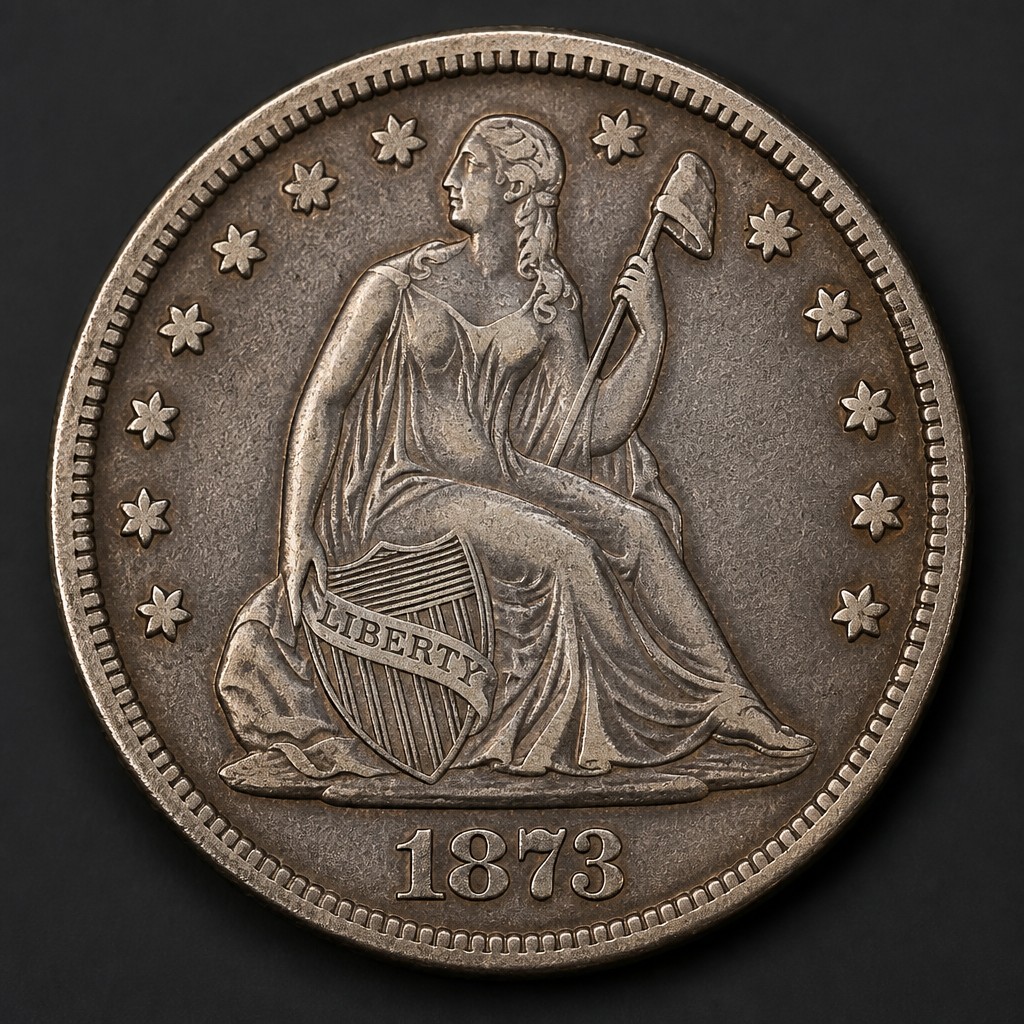
What It Is
The 1873-CC "No Arrows" dime is a Seated Liberty dime struck at the Carson City Mint early in 1873, before a mid-year law slightly increased the dime's silver weight and prompted the addition of arrows beside the date on later 1873 and 1874 issues. This particular date and mint combination without arrows is famous as one of the greatest rarities in United States coinage, with only a single confirmed genuine example known to exist, a coin whose ownership history has been closely documented for decades by specialists.
Obverse Design
Liberty is seated on a rock, holding a pole topped with a liberty cap and steadying a shield inscribed LIBERTY. By this point in the series, the obverse border reads UNITED STATES OF AMERICA in place of stars (the "Legend" obverse type used from 1860 onward), with the date below and no arrows flanking it.
Reverse Design
The reverse reads "ONE DIME" within a wreath. The mint mark "CC" appears in small letters at the base of the wreath, the standard placement for Carson City Seated Liberty dimes.
Size, Weight, Metal, and Edge
The coin measures about 17.9mm in diameter and weighs approximately 2.67 grams in a silver alloy, with a reeded edge, matching other pre-1873-weight-change Seated Liberty dimes.
Mint Marks
The defining feature is the small "CC" mint mark at the base of the reverse wreath, identifying Carson City as the mint of origin, combined with the absence of arrows beside the obverse date.
Telling It Apart From Similar Coins
The key distinctions are the CC mint mark (absent on Philadelphia strikes) and the lack of arrows beside the date (present on the more available 1873-CC and 1874-CC "Arrows" issues struck later that year and into 1874). Because only one authentic specimen is documented, any coin presented as a No Arrows 1873-CC dime is being compared against an extremely well-studied, singular reference piece.
Judging Condition at a Glance
General Seated Liberty dime wear points apply: Liberty's knee, breast, and head, and the wreath and ribbon on the reverse. Given that only one genuine example is known, condition assessment for this issue is a highly specialized matter handled by major grading services rather than something to judge casually, and its grade has been established through repeated expert examination over the years.
Authenticity Red Flags
Because only a single authentic 1873-CC No Arrows dime is known to exist, any other example claimed to be genuine should be treated with extreme skepticism. Common ways such pieces are fabricated include adding a CC mint mark to a Philadelphia coin or removing arrows from an 1873-CC Arrows dime; both alterations can potentially be detected by careful examination of the mint mark and date area under magnification for tooling, filing, or inconsistent metal texture. Given the exceptional value and rarity involved, no example should be considered genuine without full pedigree research and certification from a top-tier grading service.
Frequently asked questions
How many genuine 1873-CC No Arrows dimes exist?
Only one confirmed genuine example is known to numismatists, making it one of the rarest coins in the U.S. series.
How is it different from the 1873-CC Arrows dime?
The No Arrows version lacks the small arrowheads beside the date that were added mid-1873 to mark a weight change; the Arrows version has them.
Where does the CC mint mark appear?
In small letters at the base of the wreath on the reverse, the standard mint mark location for Seated Liberty dimes of this era.
Should I assume a coin marked this way is genuine?
No. Given that only one authentic example is known, any other claimed example should be treated with extreme caution and verified by a major grading service.