
How to Identify the 1846 Seated Liberty Dime
A practical guide to the 1846 Seated Liberty dime's design, its low Philadelphia mintage, and how to recognize this key date and screen for common alterations.
Read the full 1846 Seated Liberty Dime encyclopedia entry →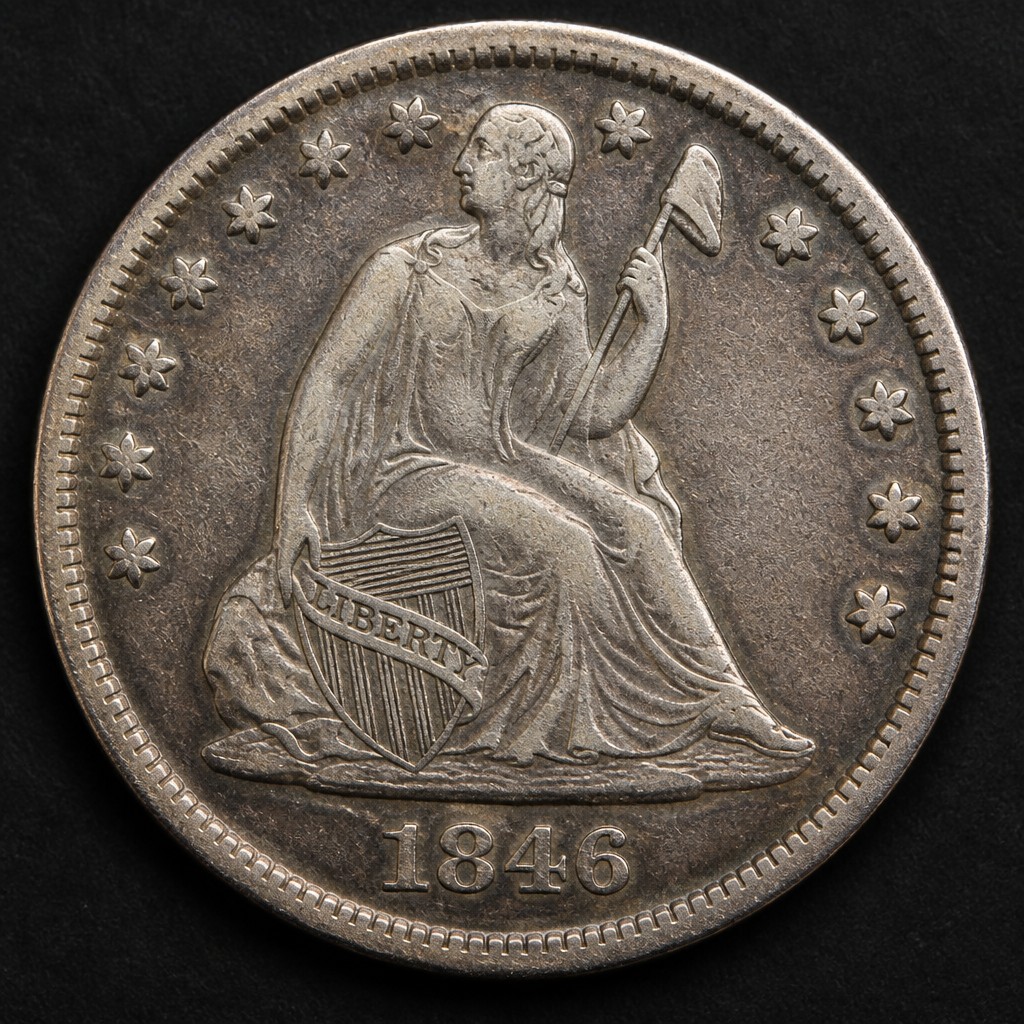
What It Is
The Seated Liberty dime, designed by Christian Gobrecht, was struck from 1837 to 1891. The 1846 issue, produced only at the Philadelphia Mint, is a recognized key date because of its unusually low mintage for the series, standing out among the otherwise more available Seated Liberty dimes of the 1840s.
Obverse Design
Liberty sits on a rock, holding a pole topped with a liberty cap in one hand and steadying a shield inscribed LIBERTY with the other. Thirteen stars surround the border and the date appears at the bottom. There is no motto on this coin; "IN GOD WE TRUST" was never added to the dime denomination during the Seated Liberty series, unlike the larger silver coins of the same general era.
Reverse Design
The reverse reads "ONE DIME" within a wreath, with UNITED STATES OF AMERICA around the border.
Size, Weight, Metal, and Edge
The coin measures about 17.9mm in diameter and weighs approximately 2.67 grams in a silver alloy, with a reeded edge. This 1846 issue predates the "Arrows at Date" weight-reduction coins of 1853-1855, so no arrows appear beside the date.
Mint Marks
There is no mint mark; only the Philadelphia Mint produced dimes in 1846, since branch mint dime production had not yet reached full scale.
Telling It Apart From Similar Coins
Distinguishing this date from the later 1853-1855 Arrows type is straightforward: those issues show small arrowheads flanking the date, which 1846 does not have. Within the "No Arrows, No Drapery/With Drapery" varieties of the mid-1840s, collectors look at fine details such as the folds of drapery at Liberty's elbow to further classify subtypes, though for most collectors simply confirming the date and the absence of arrows is sufficient.
Judging Condition at a Glance
Early wear appears on Liberty's knee, breast, and head, and on the ribbon and wreath details on the reverse. Because the original mintage was small and most examples circulated heavily, coins with legible design elements and a full readable date are already considered respectable for the grade, and higher-grade or mint-state pieces are quite rare.
Authenticity Red Flags
As a legitimate key date, 1846 dimes are occasionally the target of date alteration from more common nearby years, or of cleaning and artificial toning meant to disguise wear. Examine the date closely for signs of re-engraving or an inconsistent surface texture, and be wary of coins with an unnaturally bright, polished look inconsistent with claimed circulated wear. Because genuine examples usually show real, honest wear given the low mintage, an example claimed to be in high mint-state grade deserves extra scrutiny and, ideally, professional certification. Comparing suspect coins against clear photographs of certified genuine examples is a useful first step before pursuing formal authentication.
Frequently asked questions
Why is the 1846 dime considered a key date?
It has one of the lowest mintages in the Seated Liberty dime series, making genuine surviving examples scarce, especially in higher grades.
Does the 1846 dime have arrows next to the date?
No, arrows beside the date were only used from 1853 to 1855 to mark a temporary weight change; the 1846 issue has a plain date.
Does the Seated Liberty dime ever say 'IN GOD WE TRUST'?
No, that motto was never added to the dime denomination during the Seated Liberty series.
Where was the 1846 dime struck?
Only at the Philadelphia Mint, so it carries no mint mark.