
How to Identify the 10 Euro (Royal Marriage)
A collector's guide to attributing the 2002 Netherlands gold 10 Euro wedding coin by its Beatrix obverse, double-profile reverse, denomination, and true metal.
Read the full 10 Euro (Royal Marriage) encyclopedia entry →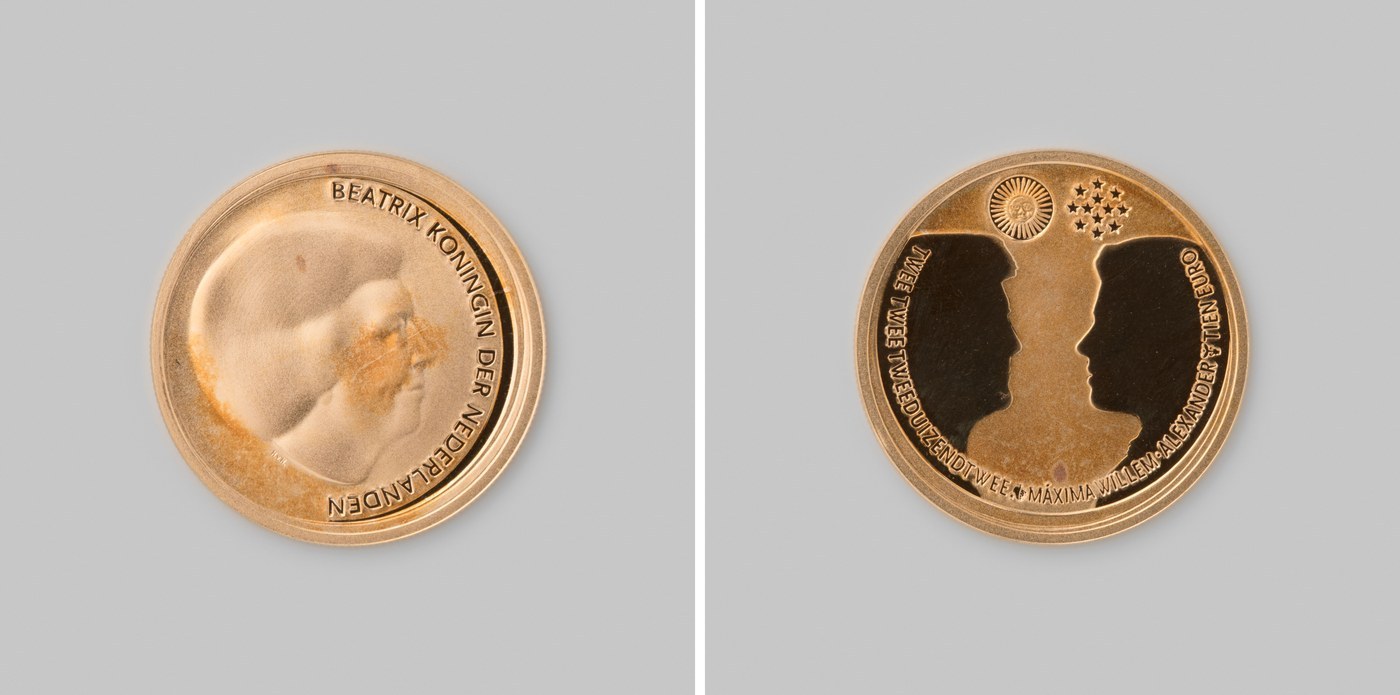
Read the Obverse Portrait and Legend
Begin with the portrait side. You should see a single profile of Queen Beatrix encircled by the legend BEATRIX KONINGIN DER NEDERLANDEN. That wording confirms both the issuing monarch and a Netherlands origin. The denomination 10 EURO and the year 2002 should also be present; a guilder denomination or a different monarch's name would point to another coin entirely.
Confirm the Double-Profile Reverse
The reverse is the key diagnostic for the wedding type. Look for two overlapping profiles set together, representing Willem-Alexander and Maxima, rather than a single bust or a coat of arms. The design is completed by stylized sun and star elements framing the couple. This conjoined double portrait is what separates the royal-marriage commemorative from other Dutch 10 Euro issues, which use different themes and images.
Check Metal, Size, and Weight
Because the same 2002 wedding coin was issued in both gold and silver, do not judge the metal by color alone. Weigh and measure the piece and compare it against published specifications for the gold version; gold is markedly denser than silver, so a gold coin and a silver coin of the same face value differ clearly in weight for a given diameter. Correct weight and dimensions, not surface color, ultimately confirm you have the gold issue.
Find the Mint Marks and Watch Look-Alikes
Inspect the fields and rim for the Royal Dutch Mint privy marks, typically the Utrecht mintmark and a mintmaster's mark, which are expected on genuine pieces. Be aware that the silver version and any later royal-themed Dutch commemoratives can resemble this coin at a glance, so match the Beatrix legend, the 10 EURO denomination, the 2002 date, and the double-profile reverse as a full set before settling on an attribution.
Authentication Cautions
Gold commemoratives attract gilded and cast fakes, so authentication matters for value-bracket pieces. Be wary of examples with soft or blurry detail, wrong weight, edge seams, or solder marks from having been mounted in jewelry. Original mint packaging and a certificate support authenticity, but for buying or selling at gold prices, third-party grading or a dealer's opinion is the safer route than a visual check alone.
Frequently asked questions
What single feature confirms this is the royal-marriage type?
The reverse double portrait. Two overlapping profiles of Willem-Alexander and Maxima with sun and star symbols identify the wedding commemorative and set it apart from other Dutch 10 Euro designs.
How do I tell the gold version from the silver one?
Weigh and measure it and compare against reference specifications. Gold is much denser than silver, so weight and diameter reveal the metal; a gold-colored surface by itself is not proof.
Which mint struck this coin, and what marks should I look for?
The Royal Dutch Mint. Look in the fields or along the rim for its privy marks, typically the Utrecht mintmark and a mintmaster's mark, which are expected on genuine pieces.
Should I have a gold example authenticated?
Yes. Because it carries gold value and is a target for gilded or cast fakes, third-party grading or an expert appraisal is worthwhile before buying or selling.