
How to Identify the 1 Litas
A collector's guide to confirming the 1991 Lithuanian 1 Litas by its radiating-line value face, the Vytis knight of the national arms, and its small silvery base-metal format.
Read the full 1 Litas encyclopedia entry →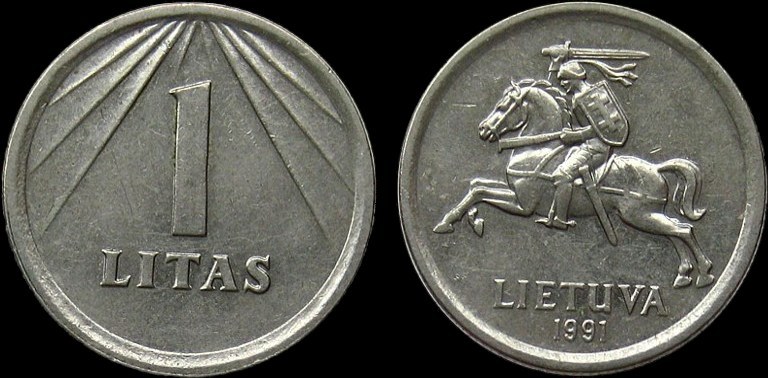
Read the Value Face
Start with the side that shows the denomination. A coin of this type spells the value as 1 LITAS set against a background of fine radiating lines fanning across the field. That clean numeral-and-legend design, with the value as the dominant element, is the fastest recognition cue. If the value reads in a different unit or lacks the radiating pattern, you are looking at another coin.
Confirm the Vytis and the Date
The national face must show the Vytis, an armored knight on a rearing horse holding a raised sword and shield, which is the central charge of the Lithuanian coat of arms. The country name in Lithuanian and the date 1991 accompany the emblem. Matching the mounted knight together with the 1991 date confirms both the country and the issue.
Check Size and Metal
This is a small coin with a silvery, pale nickel-gray tone and the light heft typical of early-1990s minor coinage. Weigh and measure the coin and note its color: a genuine piece should feel like a modern base-metal coin, not a heavy silver one. Precious-metal weight or a bright white silver look would point to something other than an ordinary circulation strike.
Distinguish It From Related Litai and Centai
Lithuania's first series included companion values such as higher litai and the smaller centai, several of which share the same design language and Vytis emblem but state a different number. Always read the numeral and the unit word: this coin states 1 LITAS, so a value reading 2 or 5 litai, or any centai figure, is a different denomination of the same family. Later Lithuanian coins also carry the Vytis with different dates, so confirm the 1991 date specifically.
Authentication Cautions
As a common modern coin, the 1991 litas is rarely worth counterfeiting, so the main concerns are correct attribution and condition rather than forgery. Watch for corrosion on base metal, harsh cleaning, and wear that softens the value face or the knight. When something looks unusual, compare it against trusted reference images of the series and confirm the denomination, the Vytis, and the 1991 date all match before concluding.
Frequently asked questions
What is the quickest way to recognize this coin?
Look for the value spelled 1 LITAS over a field of radiating lines on one side and the Vytis knight of the Lithuanian arms with the 1991 date on the other. Those two faces together identify the type.
How do I separate it from other litai or centai?
Read the numeral and unit word. This coin states 1 LITAS; companion pieces in the same series show values such as 2 or 5 litai or smaller centai, sharing the design but naming a different denomination.
How can I tell it is not silver?
It is a base-metal coin with a pale nickel-gray tone and light weight. A heavy, bright-white silver feel would be wrong for an ordinary circulation strike, so weighing the coin is a useful check.
Is it worth authenticating?
Usually not, since it is a common, inexpensive modern coin rarely worth faking. Focus instead on confirming the value, the Vytis, and the 1991 date, and on assessing condition, which drives most of the value.