
How to Identify the 1 Grosz
A collector's guide to confirming the 1949 Polish 1 Grosz by its crownless eagle, RZECZPOSPOLITA POLSKA legend, grain-framed value, and small base-metal format.
Read the full 1 Grosz encyclopedia entry →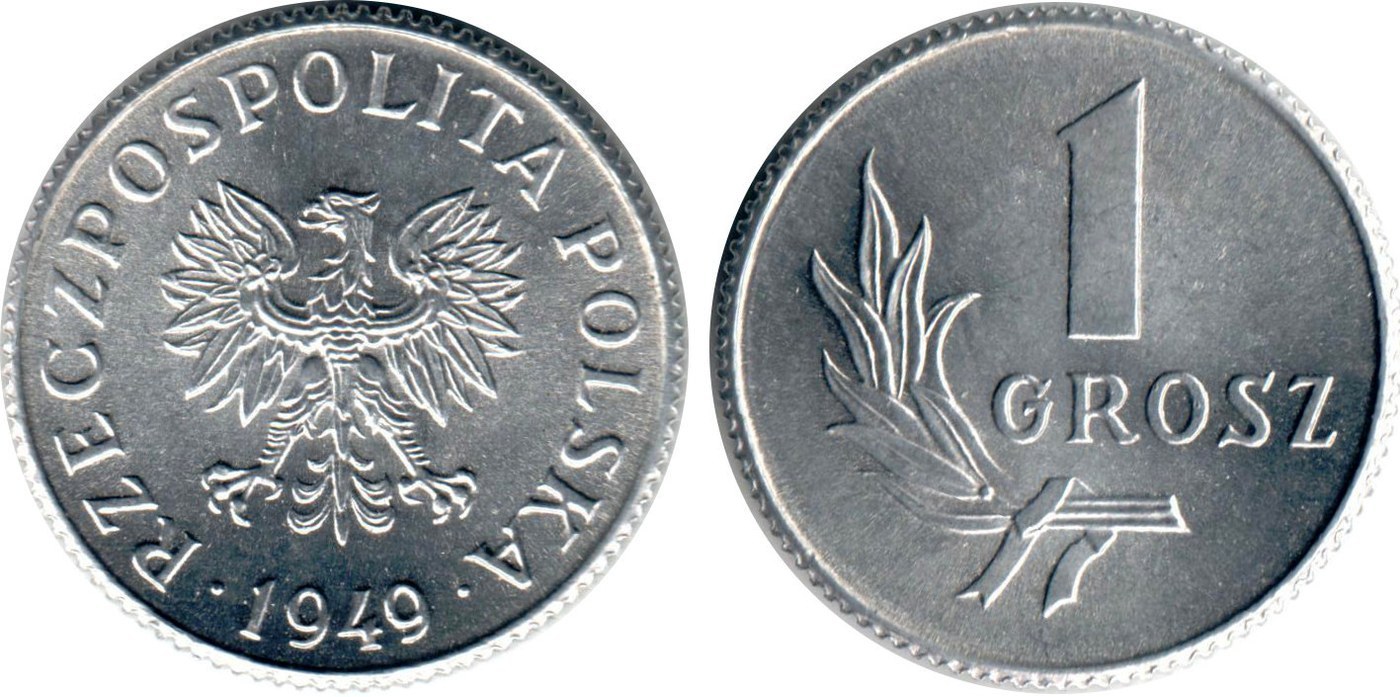
Read the Obverse Legend and Date
Start with the obverse text. A genuine coin of this type reads RZECZPOSPOLITA POLSKA around a national eagle and carries the date 1949. That legend, meaning Republic of Poland, together with the crownless eagle, is what places the coin in the postwar period before the country was renamed in the early 1950s. If the eagle wears a crown or the legend differs, you are looking at a different Polish issue.
Confirm the Eagle and the Reverse Value
The obverse must show the Polish eagle, the Orzel, with wings spread and no crown. The reverse must show the value as a large numeral 1 above the word GROSZ, flanked by stalks of grain, with no portrait or heraldic shield. Matching both the crownless eagle and the plain grain-framed 1 GROSZ is the core of the identification.
Check Size and Metal
This is a small coin, roughly fifteen millimeters across. The 1949 grosz was struck in more than one metal, so weight and color are useful diagnostics: an aluminum example is very light and pale, while a copper-nickel piece like the one observed is heavier for its size and has a silvery-gray tone. Weigh and measure the coin and note its color to determine which version you have.
Distinguish It From Other Denominations and Dates
Poland issued a matching series of higher grosz values, such as 2, 5, 10, 20, and 50 groszy, that share the crownless-eagle style but state a different number, so always read the numeral and the word after it. Similar eagle-and-value coins were struck in later years with different dates and, on the higher values, different legends, so confirm both the 1949 date and the exact 1 GROSZ denomination.
Authentication Cautions
As a common, low-value coin, the 1949 grosz is rarely counterfeited, so the main concerns are condition and correct attribution rather than forgery. Watch for corrosion on base metal, harsh cleaning, and worn examples where the metal type is hard to judge by eye. When the composition matters for value, weighing the coin is the most reliable check, and for anything unusual compare it against trusted reference images of both the aluminum and copper-nickel versions.
Frequently asked questions
How do I date this coin to the right period?
Look for the RZECZPOSPOLITA POLSKA legend, the crownless eagle, and the 1949 date. That combination marks it as a postwar issue struck before Poland was renamed the Polish People's Republic in the early 1950s.
How can I tell the copper-nickel version from the aluminum one?
Weight and color are the clearest cues. The aluminum version is very light and pale, while the copper-nickel piece is heavier for its size with a silvery-gray tone. Weighing the coin is the most reliable check.
How do I separate it from higher grosz denominations?
Read the reverse value. This coin states 1 GROSZ; related 1949 issues such as 2, 5, 10, 20, or 50 groszy share the eagle design but show a different number, so the numeral pins down the denomination.
Is it worth authenticating?
Usually not, since it is a common, inexpensive coin rarely worth faking. Focus instead on confirming the date, denomination, and metal, and on assessing condition, which drives most of the value.